How to Keep Squirrels Off Your Bird Feeders (Methods That Actually Work)
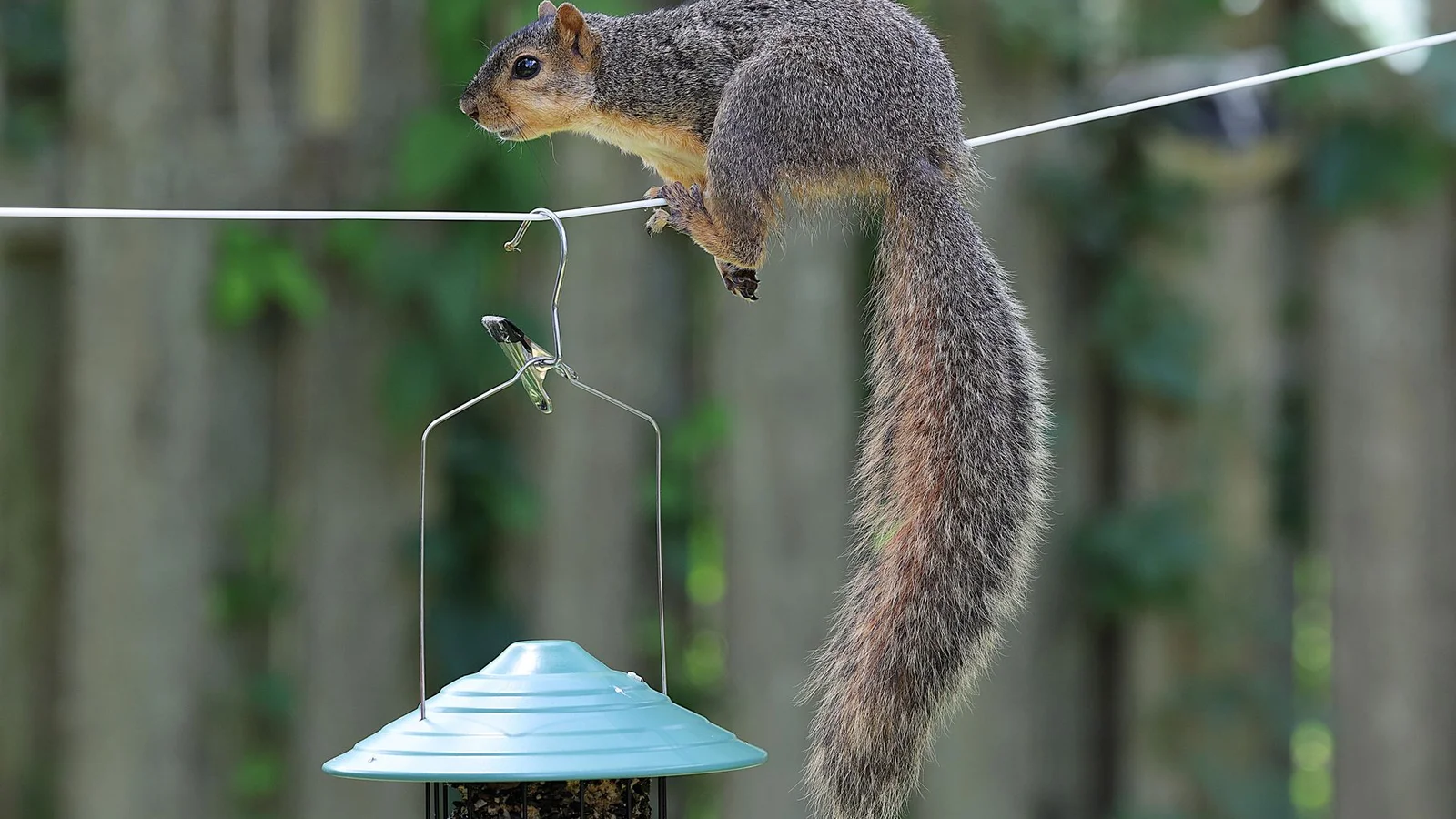
If you feed birds long enough, you will eventually meet a squirrel that treats your feeder like a personal buffet — hanging upside down, leaping from impossible distances, or simply chewing through a plastic port to get at the seed inside. Squirrels are smart, strong, athletic, and highly motivated, which is exactly why so many “squirrel-proof” products fail within a season. The good news is that a combination of the right feeder design, smart placement, and a few deterrents will genuinely keep most squirrels out — you just need to stack several strategies rather than rely on one gadget.
Understand Why Squirrel-Proofing Is Hard
Squirrels can jump roughly eight to ten feet horizontally and about five feet vertically from a standing start, and they’re capable climbers on nearly any rough vertical surface, including tree trunks, brick, and wood siding. A feeder that seems safely out of reach on paper is often well within range once you account for a nearby tree branch, fence rail, or roofline. Most squirrel problems come down to one of two things: the feeder is reachable from a jumping-off point, or the feeder itself isn’t actually built to resist a determined, 1-pound animal with sharp claws and strong teeth.
Use the 5-7-9 Rule for Placement
This is the classic guideline for pole-mounted or hanging feeders: place the feeder at least 5 feet off the ground, at least 7 feet from the nearest launch point (branch, fence, roof, deck rail), and if you’re using a baffle, mount it about 4-5 feet up the pole so squirrels can’t jump over it from the ground. Measure from the actual edge of the feeder, not the pole, since squirrels only need to get a paw on the tray or perch to start working the rest of the way in.
Before installing anything, walk your yard and look up — a feeder that’s technically 8 feet from the trunk of a tree can still be well within jumping range of a branch that extends farther out than the trunk itself.
Install a Real Baffle
A baffle is a dome or cylinder that prevents a squirrel from climbing a pole or dropping onto a feeder from above. Two types cover most situations:
- Pole baffles — a cone or stovepipe-style cylinder mounted on the pole below the feeder, which spins or simply presents no grip when a squirrel tries to climb past it. These need to be wide enough (typically at least 15–18 inches in diameter) that a squirrel can’t reach around the edge.
- Hanging or dome baffles — mounted above a feeder that hangs from a branch or bracket, blocking squirrels from dropping down onto it from above.
Cheap, narrow, or flimsy baffles are the most common point of failure — a determined squirrel will simply climb around a baffle that’s too small or bend one that isn’t rigid enough. It’s worth paying for a sturdy, properly sized one rather than the cheapest option on the shelf.
Choose a Feeder Designed to Resist Squirrels
Feeder design matters as much as placement. A few approaches that hold up well in practice:
Weight-Activated Feeders
These feeders use a spring-loaded perch or shroud that closes the seed ports when something heavier than a songbird lands on it — typically adjustable so you can dial in the cutoff weight. They’re one of the more reliable options, though squirrels occasionally figure out how to distribute their weight or brace against the cage to defeat the mechanism, so it’s worth checking the feeder’s reviews for your specific squirrel population.
Cage or Guard Feeders
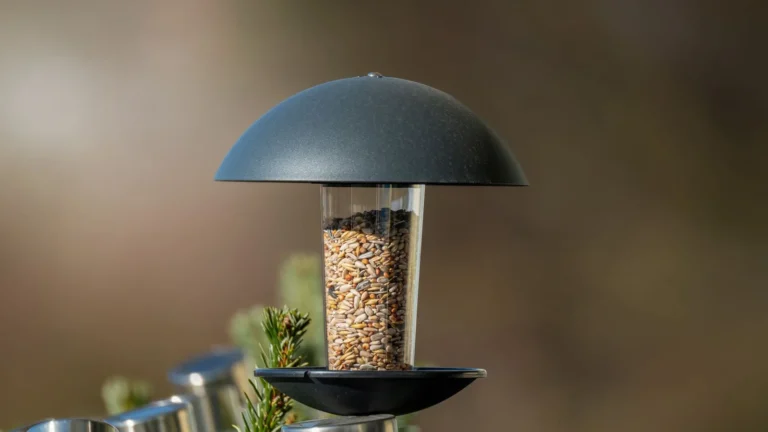
A wire cage surrounding a standard tube feeder lets small songbirds slip through the gaps while keeping squirrels (and larger birds like grackles) from reaching the ports. These are simple, have no moving parts to break, and tend to be very durable.
Metal Construction
Squirrels can chew through wood and plastic ports with surprising speed. Feeders with metal ports, metal cages, or all-metal bodies hold up far longer than plastic ones under sustained squirrel pressure.
Choose Foods Squirrels Like Less
Diet matters. Black oil sunflower and cracked corn are squirrel favorites, so a feeder full of either is going to draw persistent attention. Safflower seed has a bitter taste most squirrels avoid, and nyjer is both too small and not appealing enough to be worth their effort — which is part of why dedicated finch feeders rarely have squirrel problems. If squirrels are only a minor nuisance, simply switching your main seed to safflower can noticeably reduce the pressure without needing any hardware changes at all.
Products with capsaicin (the compound that makes chili peppers hot) are sometimes sold as squirrel-repellent seed coatings or standalone additives. Birds can’t taste capsaicin, but mammals like squirrels find it unpleasant, and it’s considered safe for birds when used as directed. It’s a reasonable extra layer, though it works best combined with a good feeder and placement rather than as a stand-alone fix.
Give Squirrels Their Own Feeding Spot
Sometimes the most effective approach isn’t exclusion at all — it’s distraction. Setting up a separate squirrel feeder well away from your bird feeders, stocked with dried corn on the cob or peanuts, can pull attention away from the birdfeeder entirely. This won’t work for every squirrel or every yard, but many backyard birders find it cuts down on feeder raids considerably, since squirrels tend to settle for the easiest available food source.
Skip the Myths
A few widely repeated “solutions” don’t hold up well in practice. Petroleum jelly or grease on a pole quickly gets fur-matted and stops working, and it can be messy and potentially harmful if it gets on feathers. Fake owls and rubber snakes lose their effect within days once squirrels realize they never move. Ultrasonic repellent devices have little reliable evidence behind them for squirrels. None of these are dangerous to try, but don’t count on them as your main line of defense.
Deal With Ground-Feeding Squirrels Separately
Even a perfectly baffled pole feeder won’t stop squirrels from cleaning up seed that falls to the ground beneath it. A tray or catch basin mounted under a feeder reduces the amount of spilled seed in the first place, which both cuts down on waste and removes one of the easiest food sources squirrels have in your yard. If you’re using a platform or ground-level feeder for juncos, sparrows, and doves, accept that it will be harder to fully exclude squirrels there — a wire cage with gaps sized for small birds is really the only reliable option for a ground setup, since baffles don’t apply to a feeder that’s already at ground level.
Combine Strategies for the Best Results
No single trick reliably squirrel-proofs a feeder on its own — the real solution is layering a few of these together: proper distance and placement, a correctly sized baffle, a feeder actually built to resist squirrels, and seed they’re less interested in. Start with placement and a baffle, since those solve the problem at its root, then add a squirrel-resistant feeder design and food choice on top. With that combination in place, most yards see squirrel activity drop dramatically, even if the occasional acrobat still gives it a try.
Related reading
- How to Clean Bird Feeders and Keep Your Flock Healthy
- Bird Bath Basics: Water That Brings in More Birds Than Feeders
- Best Bird Feeders for Beginners: Types, Placement, and What to Avoid
- Platform, Tube, or Hopper: Choosing the Right Bird Feeder
Sources & further reading
Outsmarting Squirrels: What to Look For
What actually matters when you’re shopping? Beating squirrels is about mechanics, not any single “squirrel-proof” brand.
Do you recommend one specific model? Honestly, no — we haven’t tested every product on the market, so we point you toward categories rather than a single SKU. For a weight-activated feeder, the ports close under a squirrel’s weight; you can see current options on Amazon. For a wrap-around pole baffle, blocks pole-climbers cold; compare today’s listings on Amazon.
Some links here are affiliate links — buy through them and Feeder Flock may earn a small commission at no extra cost to you.