Platform, Tube, or Hopper: Choosing the Right Bird Feeder
Walk into any well-stocked feed store or scroll through an online bird supply shop and you’ll be faced with dozens of feeder styles, but nearly all of them boil down to three core designs: platform, tube, and hopper. Each one attracts a different mix of birds, holds seed differently, and comes with its own maintenance quirks. Picking the wrong one for your goals means either disappointing bird activity or a lot more cleanup than you bargained for. Here’s a practical breakdown of all three, so you can choose based on what you actually want out of your feeder — not just what looked nice on the shelf.
Platform Feeders: The Open Buffet
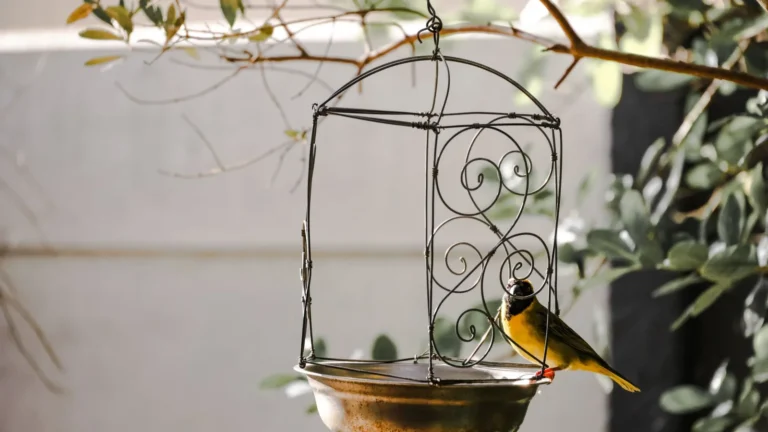
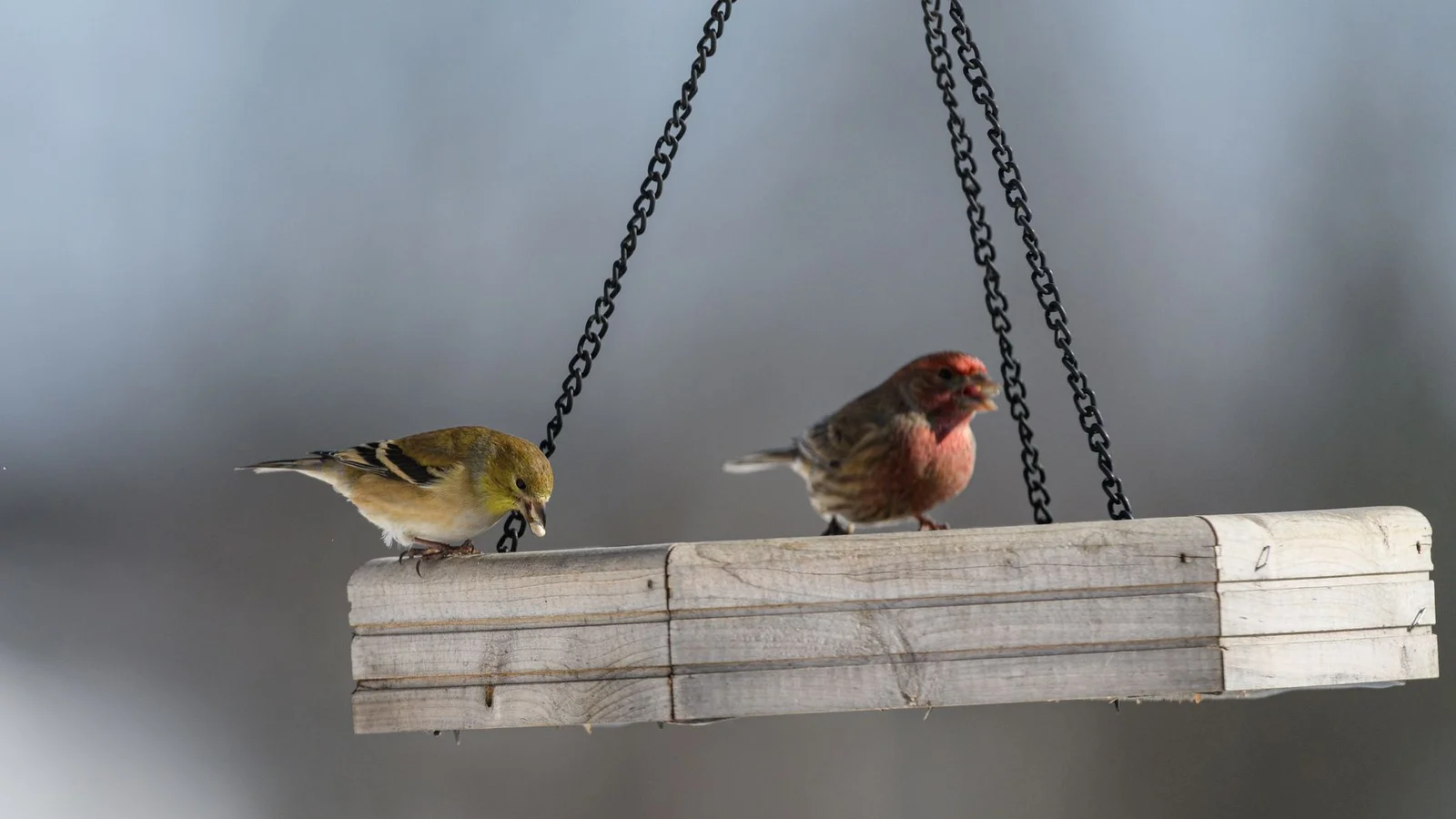
A platform feeder is exactly what it sounds like — a flat, open tray, usually with a mesh or slatted bottom for drainage, sometimes with low sides to keep seed from blowing off. It can be mounted on a post, hung from a branch, or set directly on the ground.
Pros
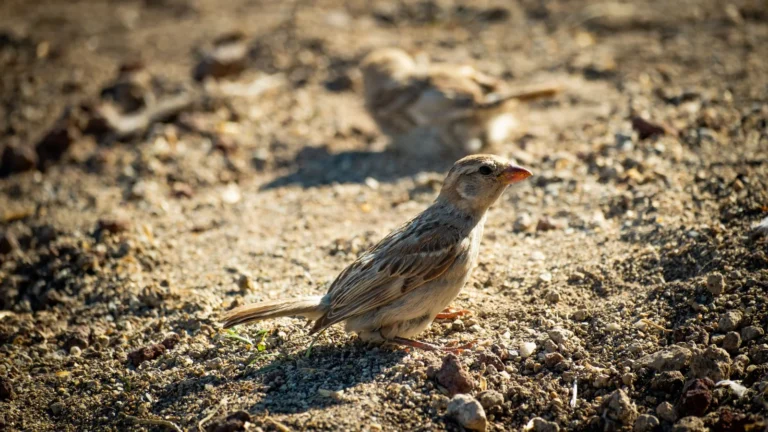
Platform feeders attract the widest range of species of any feeder type, because the open design accommodates birds of every size and foraging style, including ground feeders like doves, juncos, and sparrows that won’t use a tube or hopper feeder at all. They’re also the easiest to clean, since there’s no housing to disassemble. You can offer virtually any food on a platform, from mixed seed to suet crumbles to mealworms to fruit.
Cons
The open design means seed is fully exposed to rain and snow, so it can get wet, clump, and mold quickly if not checked often. Platform feeders also offer no protection from squirrels, and because they attract everything, they can draw in less desirable visitors too, including house sparrows, starlings, and, if placed too low, curious raccoons. Seed capacity is generally lower than a tube or hopper of similar size, meaning more frequent refilling.
Best For
Yards that want maximum species diversity, especially anyone hoping to attract ground-feeding birds, or birders who want to offer varied foods like fruit and mealworms alongside seed.
Tube Feeders: The Precision Option
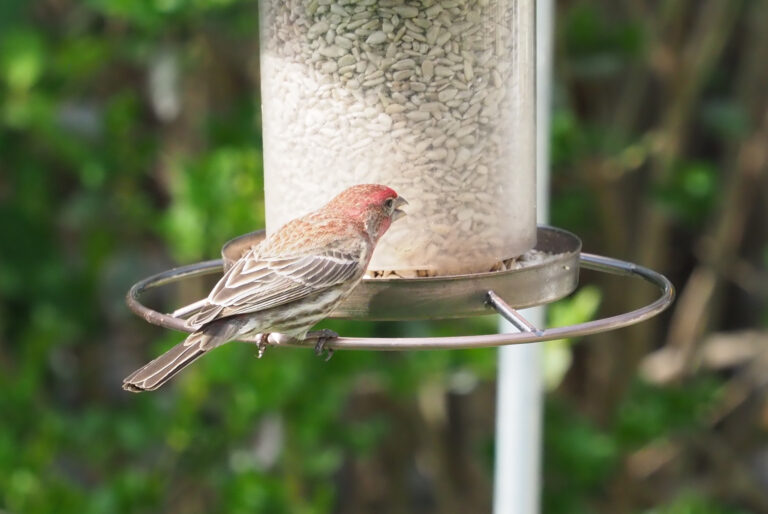
A tube feeder is a cylindrical hanging feeder, usually clear plastic, with multiple feeding ports and small perches spaced along its length. Seed is loaded from the top and gravity-feeds down as birds empty the lower ports.
Pros
Tube feeders keep seed well protected from rain thanks to the enclosed design, so waste and mold are much less of an issue than with a platform. Many tube feeders are designed specifically for smaller, agile perching birds — chickadees, finches, titmice, nuthatches — which means they naturally exclude larger birds like grackles and pigeons that some people prefer to keep away. Tube feeders designed specifically for nyjer (thistle) seed, with tiny ports, are excellent for pulling in goldfinches and other small finches almost exclusively. Squirrel-resistant tube feeders with weighted perches or cage housings are widely available and genuinely effective.
Cons
Tube feeders exclude larger birds and ground feeders by design, so if you want cardinals, jays, or doves at this feeder, you’ll need a model with larger perches or a tray attachment. They can also be more fiddly to clean thoroughly since you’re working inside a narrow tube, and cheaper models can crack or cloud over time with UV exposure.
Best For
Attracting small songbirds while discouraging larger, more aggressive species, and for anyone specifically targeting finches with nyjer seed.
Hopper Feeders: The Reliable Middle Ground
A hopper feeder is typically a house-shaped structure with clear walls that hold a seed reservoir, dispensing seed onto a tray or ledge at the bottom as it’s eaten. It’s the classic image most people picture when they think “bird feeder.”
Pros
Hoppers hold a large volume of seed, so they need refilling less often than platform or tube feeders. The roofed design offers decent protection from rain and snow while the tray still allows medium and larger birds to perch comfortably, making hoppers a favorite of cardinals, jays, and grosbeaks in addition to smaller birds. They strike a nice balance between capacity, weather protection, and accessibility to a broad range of species.
Cons
Hoppers are usually the largest and heaviest feeder type, which can make squirrel-proofing more of a challenge unless you invest in a baffle system. Seed can sit in the tray longer than in a tube feeder, so mold and spoilage checks are still necessary, especially after rain. They’re also generally pricier than a basic tube or platform feeder.
Best For
Anyone who wants a lower-maintenance, set-it-and-forget-it feeder that still brings in a solid range of species, including larger birds that tube feeders exclude.
Comparing Them Side by Side
- Widest species range: Platform feeders win, especially for ground feeders.
- Best weather protection: Tube feeders, followed closely by hoppers.
- Least maintenance/refilling: Hopper feeders, thanks to large seed capacity.
- Easiest to clean thoroughly: Platform feeders, with their simple open design.
- Best for targeting specific birds: Tube feeders, particularly nyjer tubes for finches.
- Best squirrel resistance options: Tube feeders with cages or weighted perches, though all three types have squirrel-resistant versions available.
Matching the Feeder to Your Yard
Every feeder type has a job. Here’s the kind to reach for, not a brand to chase:
An open platform feeder — the pick when you want to welcome everything; you can see current options on Amazon. A tube feeder — clean, versatile and easy to squirrel-proof; you can compare today’s listings on Amazon. A hopper feeder — high capacity for less-frequent refills; you can browse the range on Amazon.
As an Amazon Associate, Feeder Flock earns from qualifying purchases. Your price never changes.
Why Most Experienced Birders Use All Three
If you talk to anyone who’s been feeding birds for years, you’ll notice they rarely rely on a single feeder type. A common and effective setup is a tube feeder with black oil sunflower or a mix for the small songbirds, a hopper feeder nearby for cardinals, jays, and other larger visitors, and a platform or ground station for doves, juncos, and sparrows. Spacing these out across the yard — rather than clustering them all on one pole — also reduces crowding and squabbling, and lets you observe different species without them competing directly for the same perch.
Matching Feeder Type to Your Goals
If you’re just starting out and want to see what shows up, a hopper feeder filled with a quality mixed seed blend is the easiest entry point — low maintenance and broadly appealing. If you’re specifically chasing finches and goldfinches, add a nyjer tube feeder. If you’ve noticed doves, sparrows, or juncos hanging around the edges of your yard without visiting your feeder, a platform or ground tray will likely bring them in. And if squirrels have been a constant battle, look specifically for tube or hopper models marketed as squirrel-resistant, paired with a baffle on the pole or hanging wire.
A Word on Materials and Build Quality
Within each of these three categories, build quality varies enormously, and it’s worth paying attention to before you buy. Cheap plastic tube feeders can warp, crack, or yellow within a season or two of sun exposure, while metal-reinforced ports and stainless steel construction hold up for years. Wooden hopper feeders look attractive but need periodic sealing or staining to resist rot, especially in wet climates, and can absorb moisture that promotes mold in the seed reservoir if the wood isn’t treated. Platform feeders with a solid mesh bottom, rather than solid wood or plastic, drain much better after rain and are worth the small price difference. Recycled plastic or powder-coated metal feeders in any of the three styles tend to be the most weather-resistant long-term investment, even though they cost more upfront than a basic starter feeder.
There’s No Single Right Answer
Platform, tube, and hopper feeders each solve a different problem, and none of them is objectively the “best” feeder — they’re tools suited to different goals. The right choice depends on which birds you’re hoping to see, how much maintenance you’re willing to do, and how much you want to manage squirrels and weather. Most yards end up better off with a small combination of all three than with one feeder trying to do everything at once.
Related reading
- How to Clean Bird Feeders and Keep Your Flock Healthy
- Bird Bath Basics: Water That Brings in More Birds Than Feeders
- How to Keep Squirrels Off Your Bird Feeders (Methods That Actually Work)
- Best Bird Feeders for Beginners: Types, Placement, and What to Avoid