Best Bird Feeders for Beginners: Types, Placement, and What to Avoid
Setting up your first bird feeder should be simple, but the sheer number of options at the garden center can make it feel like a research project. The good news is that you don’t need to buy five different feeders on day one. Pick one or two styles that match the birds you want to see, put them in the right spot, and keep them clean — that combination will do more for your backyard birding than any amount of fancy hardware. Here’s what actually matters when you’re starting out.
Tube Feeders: The Reliable Everyday Choice
A tube feeder is a cylinder, usually clear plastic, with several feeding ports and perches running down the sides. It’s the feeder most people picture when they think “bird feeder,” and for good reason: it holds a decent volume of seed, keeps it relatively dry, and is easy to hang almost anywhere.
Tube feeders are best suited to small clinging birds — chickadees, finches, titmice, nuthatches, and sparrows all use them comfortably. Look for one with metal ports around the feeding holes; birds (and squirrels) chew through plain plastic surprisingly fast, and enlarged holes waste seed. A tray or seed catcher at the base is a nice extra, since it catches spilled hulls and gives ground-feeding birds like juncos a chance to clean up underneath.
If you want to attract goldfinches specifically, a narrow tube feeder filled with nyjer (thistle) seed and tiny slotted ports is worth adding once your basic setup is running.
Hopper Feeders: High Capacity, Broad Appeal
Hopper feeders look like little houses or bins with a roof, walls, and a trough where seed collects as it’s eaten. They typically hold more seed than a tube feeder, so you’re not refilling as often, and their wide feeding trays accommodate a broader mix of birds — cardinals, jays, and grosbeaks in particular appreciate the extra landing space that a tube feeder’s small perches don’t offer.
The tradeoff is that hopper feeders are usually mounted on a pole rather than hung from a hook, which means slightly more setup, and their flat trays can hold moisture if the roof doesn’t overhang enough. When shopping, check that the roof extends a couple of inches past the trough on all sides.
Platform Feeders: The Most Versatile, Least Protected
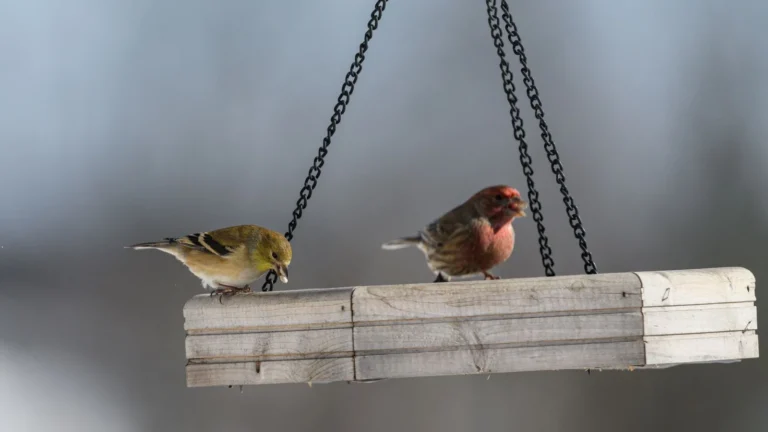
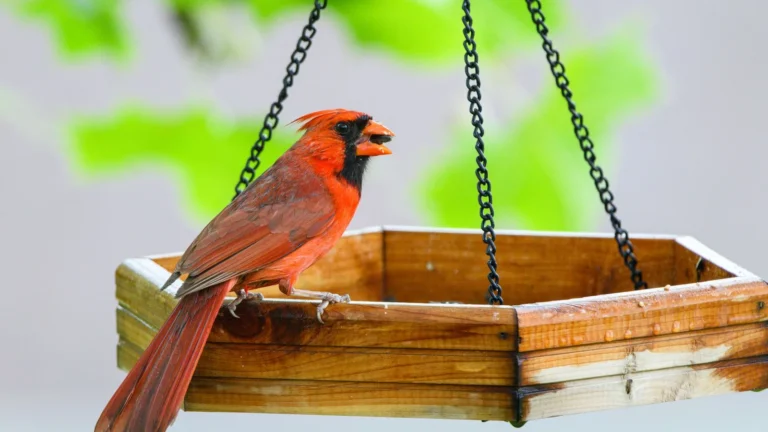
A platform (or tray) feeder is exactly what it sounds like: an open tray, sometimes with low mesh sides for drainage, set on a pole or hung from a branch. Nothing attracts a wider range of species — doves, jays, cardinals, sparrows, and woodpeckers will all use an open platform, and it’s the easiest style for ground-feeding birds if you set one low or place seed directly beneath a hanging feeder.
The catch is that open trays expose seed to rain and snow, so it can mold or sprout if you’re not emptying and refilling regularly. They also offer zero protection from squirrels and larger birds that might dominate the space. A platform feeder works best as a second feeder alongside a tube or hopper, not as your only one, and it should be checked and cleaned more often than an enclosed style.
Suet and Window Feeders: Specialty Options Worth Adding Later
Suet feeders
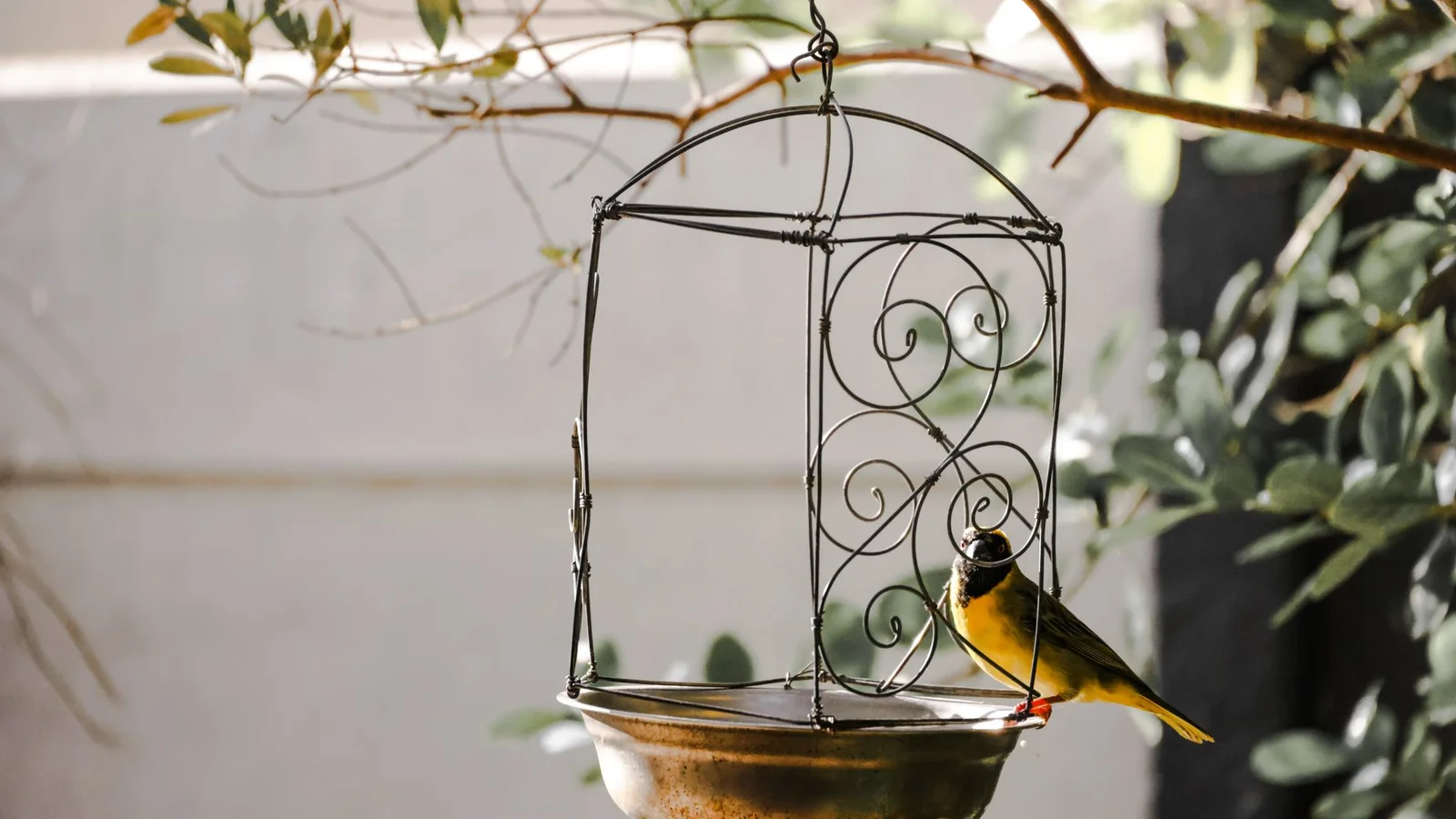
A suet feeder is usually a simple wire cage that holds a compressed block of fat and seed. It’s what draws in woodpeckers, nuthatches, and wrens — birds that eat insects and fat more than seed, and that you likely won’t see at a tube or hopper feeder. Suet is especially valuable in cold weather when birds need concentrated calories. Hang it on its own hook rather than crowding it next to your seed feeder, since suet-eating birds tend to prefer a bit of separation.
Window feeders
These attach to glass with suction cups and let you watch birds from just inches away, which is a great option for apartments, small yards, or anyone who wants an up-close view. They hold less seed and need more frequent refilling than a pole-mounted feeder, but they also solve one placement problem automatically: a feeder stuck directly on the glass poses less collision risk than one hung a few feet away (more on that below).
Where to Put Your Feeder
Placement affects how many birds show up and how safe they are once they do, so it deserves as much thought as the feeder itself.
- Height: Most feeders do well 5 to 6 feet off the ground — high enough to be out of easy reach for cats and dogs, low enough that you can refill and clean it without a ladder.
- Cover nearby: Birds want a shrub or tree within 10 to 15 feet where they can retreat if a hawk or cat appears, and where they can wait their turn at a busy feeder. But don’t put the feeder directly inside dense brush — that gives cover to predators too. Aim for “near cover, not buried in it.”
- Distance from windows: Window strikes are one of the most common ways backyard birds get hurt, and the danger zone is the middle distance — roughly 3 to 10 feet from the glass. At that range, a bird startled from the feeder can build up enough speed to injure itself on a collision, because the glass is still close enough to reflect sky or trees but far enough for the bird to gain momentum. The safer options are to place the feeder either very close to the window (within a couple of feet, so a startled bird has no room to accelerate) or well beyond 10 feet, and to add decals or screening to any glass that reflects the sky.
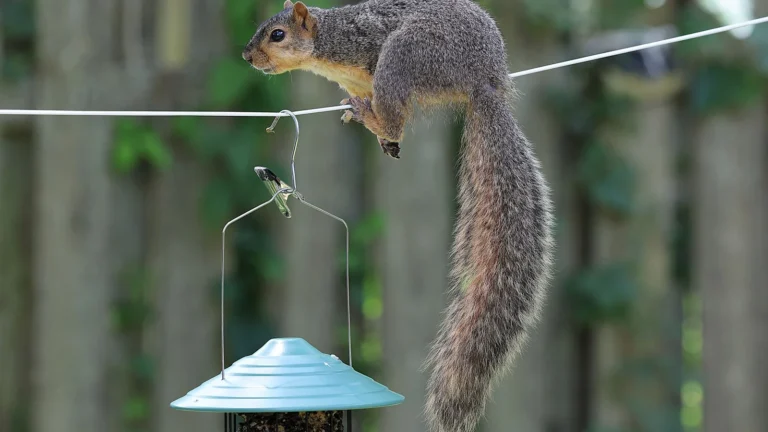
- Predator safety: Keep feeders away from flat surfaces a cat can jump from, like fences, low walls, or wide railings, and mount pole feeders with a baffle if squirrels or raccoons are a problem in your area. A baffle — a wide dome or cylinder below the feeder — is far more effective than any “squirrel-resistant” feeder gimmick.
What to Avoid
A few mistakes account for most of the disappointment new feeder owners run into.
- Cheap, flimsy feeders: Thin plastic cracks in freezing weather, and unprotected feeding ports get chewed wide open within a season. Spend a little more on metal reinforcement around ports and a UV-stable plastic or powder-coated metal body — it pays for itself by not needing replacement every year.
- Bad placement: A feeder stuck in full, exposed sun with no cover nearby, or hung in that dangerous middle zone near a window, will either sit empty or lead to collisions. Take the time to walk your yard and actually check sightlines and distances before you commit to a spot.
- Dirty feeders: This is the one that matters most for bird health. Wet, moldy, or caked seed can spread disease among birds that gather at the same feeding spot, and a slimy hopper tray or grimy tube is a warning sign, not just an eyesore. Clean feeders every couple of weeks with hot water and a stiff brush, and more often in wet or humid weather; a diluted bleach solution (about one part bleach to nine parts water), rinsed thoroughly and air-dried, works well for a deeper clean. If you ever notice sick or lethargic birds at your feeder, take it down and clean it immediately, then wait a few days before rehanging it.
- Overfilling: A feeder packed to the brim just gives seed more time to sit and go stale or damp before it’s eaten. Fill to a level your local birds will get through in a few days, especially in warm or wet weather.
Getting Birds to Find a New Feeder
It’s normal for a brand-new feeder to sit untouched for a few days to a couple of weeks — birds need time to notice it and decide it’s safe. A few things speed this up:
- Start with a crowd-pleaser seed. Black-oil sunflower seed appeals to the widest range of species and is the single best default if you’re only buying one type to start.
- Sprinkle a little seed on the ground nearby. This gives ground-feeding birds an easy first taste and makes the feeder area look active, which draws attention from birds passing overhead.
- Be patient and consistent. Keep the feeder filled and in the same spot rather than moving it around while you wait — birds build habits around reliable locations.
- Add a water source. A shallow birdbath near the feeder often brings in birds faster than seed alone, since they’re scouting for both food and water.
Once birds are visiting, you’ll get a much better sense of what your yard’s regulars actually want, and you can add a suet cage or a nyjer tube to round things out. But the fastest path to a lively feeder station is still the simplest one: a sturdy, well-placed feeder with fresh seed, kept clean, given a little time to be discovered.
Related reading
- How to Clean Bird Feeders and Keep Your Flock Healthy
- Bird Bath Basics: Water That Brings in More Birds Than Feeders
- Hummingbird Feeders: Nectar Recipe, Placement, and Cleaning
- How to Keep Squirrels Off Your Bird Feeders (Methods That Actually Work)
Sources & further reading
How to Choose Your First Feeder
You don’t need a specific brand to get this right — you need the right type of feeder. Here’s what to weigh:
A weight-activated squirrel-proof feeder — the ports close when something heavy climbs on; you can see current options on Amazon. A classic tube feeder — versatile and easy to refill; you can compare today’s listings on Amazon. An open platform or tray feeder — welcomes cardinals, jays and ground feeders; you can browse the range on Amazon. A hopper feeder — high capacity so you refill less often; you can check current picks on Amazon.
Heads up: Feeder Flock is an Amazon Associate, so a purchase through these links may send a few cents our way. It never costs you more.