How to Identify Common Backyard Birds: A Beginner’s Field Guide
Once you start paying attention to the birds visiting your feeders, a natural question follows almost immediately: what am I actually looking at? Learning to identify common backyard birds isn’t as intimidating as field guides with hundreds of species might suggest. In reality, most North American yards are visited by a fairly predictable cast of characters, and once you learn to recognize a handful of key features, putting a name to a bird becomes second nature. Here’s a beginner-friendly approach to backyard bird identification.
Start With the Four Keys: Size, Shape, Color, and Behavior
Rather than trying to memorize every species, birders use a simple mental checklist to narrow down possibilities quickly.
- Size — Compare the bird to something familiar, like a sparrow, robin, or crow. Is it smaller than a sparrow, about robin-sized, or larger?
- Shape — Note the bill shape (thin and pointed, short and stout, curved), tail length, and overall body proportions.
- Color and pattern — Look for the most obvious field marks: wing bars, eye rings, breast streaking, or a solid-colored head.
- Behavior — Does it feed on the ground, cling to bark, hover, or perch upright on a wire?
Running through these four categories, even mentally, will get you to the right species far faster than flipping randomly through a guide.
Common Backyard Birds by Feeder Preference
One of the fastest ways to learn backyard species is to notice which foods they favor, since it often narrows the identification before you even look closely at plumage.
Seed feeder regulars
The Northern Cardinal is one of the easiest birds to identify in eastern and central North America — males are entirely bright red with a black face mask and a prominent crest, while females are warm tan-brown with red accents on the wings, tail, and crest. Both sexes share a thick, cone-shaped orange bill built for cracking seeds.
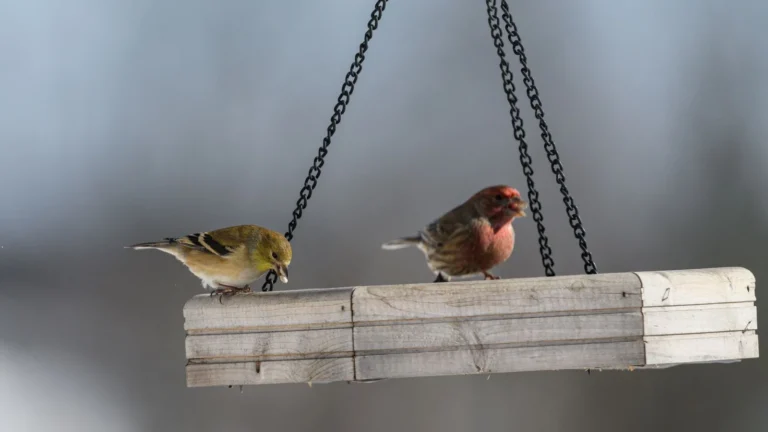
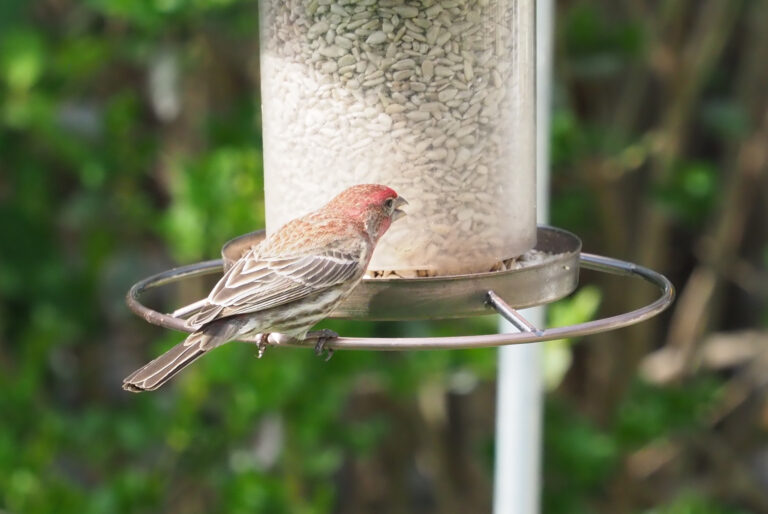
The House Finch and Purple Finch are frequently confused. House finch males have a reddish wash concentrated on the head and breast with brown-streaked flanks, while purple finch males look as though they were dipped in raspberry juice over their whole head and back. House finches are far more common at most feeders.
The American Goldfinch is a nyjer-feeder favorite, bright lemon-yellow with black wings and a black cap in breeding-season males, fading to a duller olive in winter for both sexes.
Chickadees, titmice, and nuthatches
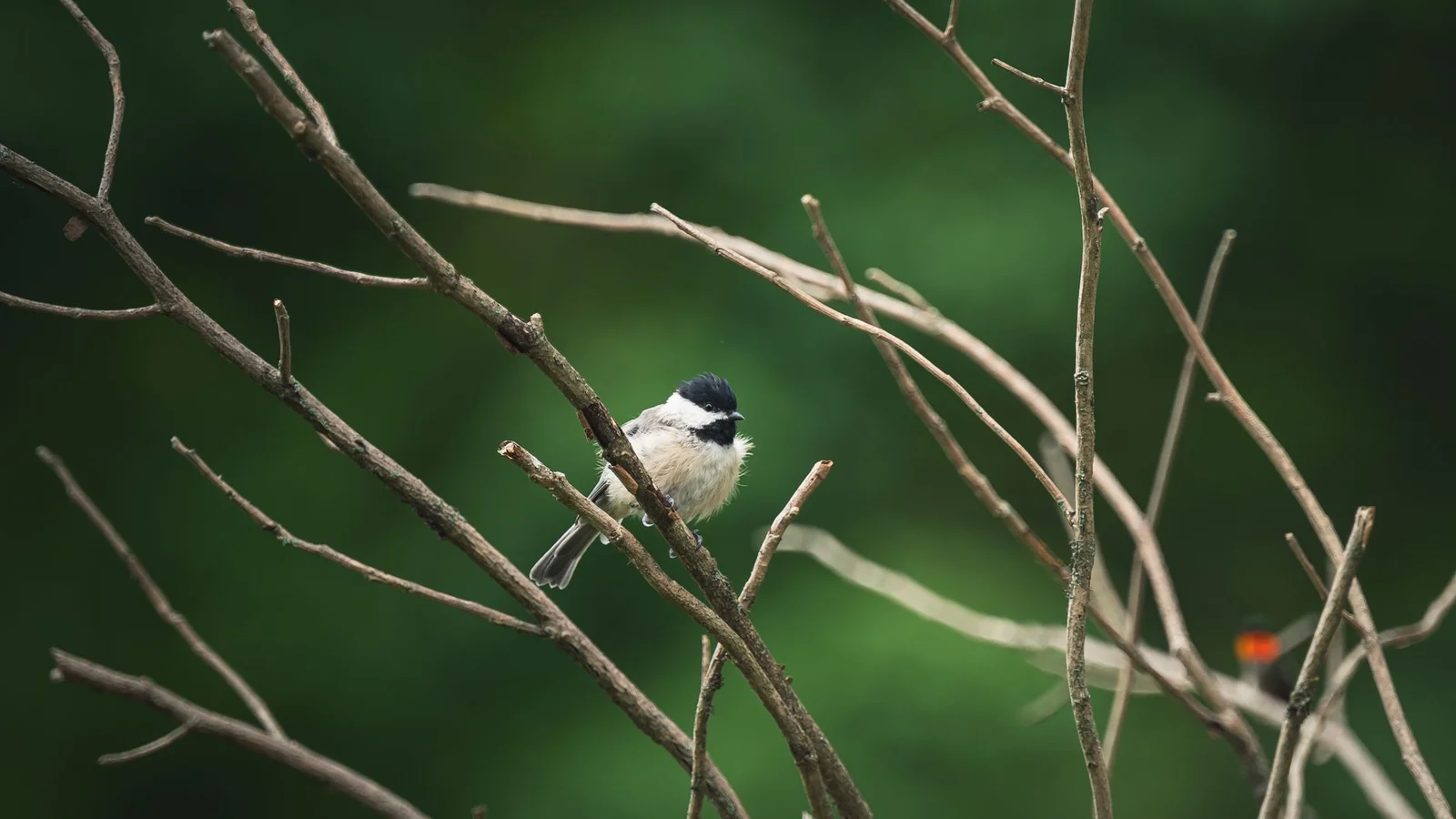
The Black-capped Chickadee (or Carolina Chickadee in the southeast) is tiny, round, and unmistakable with its black cap and bib set against white cheeks and a gray back. Its cheerful “chick-a-dee-dee” call is often how people notice it before they see it.
The Tufted Titmouse is a soft gray bird with a pointed crest and a peachy wash on its flanks, often seen grabbing a single seed and flying off to crack it elsewhere rather than lingering at the feeder.
Nuthatches are easy to identify by behavior alone — the White-breasted Nuthatch is famous for creeping headfirst down tree trunks, something almost no other backyard bird does. It has a blue-gray back, white face and underparts, and a black cap.
Woodpeckers
The Downy Woodpecker is the smallest and most frequent woodpecker at backyard suet feeders, black and white with a small bill and a red patch on the back of the male’s head. The nearly identical but larger Hairy Woodpecker has a notably longer, more substantial bill in proportion to its head — a helpful trick when the two are side by side.
Ground feeders
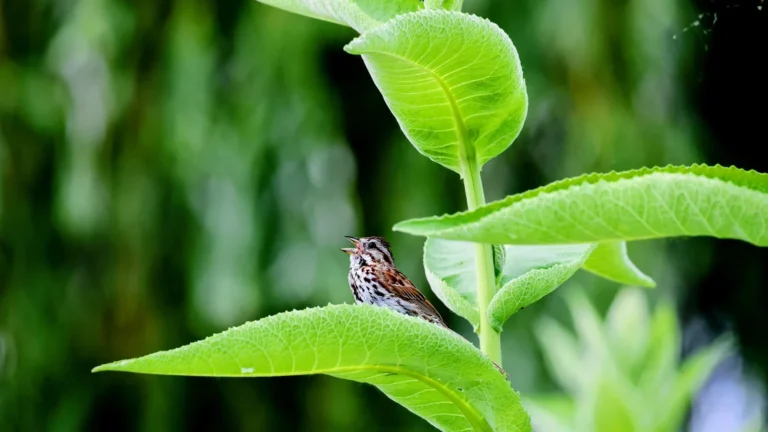
The Dark-eyed Junco, sometimes called a “snowbird,” is a small, round, slate-gray bird with a white belly and pink bill that appears at many feeders mainly in fall and winter, foraging on the ground beneath feeders rather than perching on them. Various native sparrows, including the streaky-breasted Song Sparrow and the rusty-capped American Tree Sparrow, also favor scattered seed and ground trays.
Birds You’ll See but Rarely at Feeders
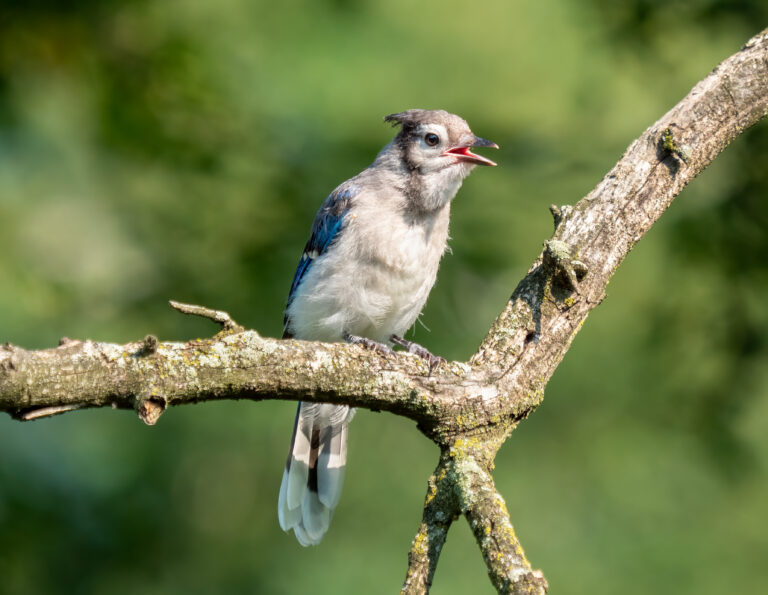
Not every yard visitor comes for seed. The American Robin, with its brick-orange breast and dark gray-brown back, is usually seen hunting earthworms on lawns rather than at a feeder. Blue Jays are large, loud, and unmistakable with their blue, white, and black plumage and prominent crest — they’ll take peanuts and sunflower seed but also raid nests and cache food, giving them a reputation as the neighborhood troublemaker. Mourning Doves, soft grayish-tan with a slim body and long pointed tail, are common ground feeders that often arrive in pairs.
Learn the Songs, Not Just the Look
Many backyard birds are heard long before they’re seen, especially when they’re tucked into dense foliage or perched high in a tree canopy. Learning even a handful of common songs and calls will often tell you a bird is nearby before you ever spot it, and can help confirm an identification when the visual field marks are ambiguous. The chickadee’s namesake call, the cardinal’s clear, whistled “cheer-cheer-cheer,” and the blue jay’s harsh, repeated “jay-jay” are all good starting points since they’re distinctive and heard in most yards across their range. Spend a few minutes a week listening to recordings of the birds you already know you have, and you’ll start picking their calls out of the general background noise of your yard without even trying.
Watch for Seasonal Changes
The birds in your yard shift throughout the year, and the same species can look different from one season to the next. Many birds molt into duller, less colorful winter plumage after breeding season ends, which is why an American Goldfinch looks bright yellow in summer but olive-brown in January. Some backyard regulars, like the Dark-eyed Junco in much of the country, are present only in the colder months and head north to breed once spring arrives. Others, such as many warblers, pass through briefly during spring and fall migration and are never seen at other times of year. Keeping a simple running list by month, rather than assuming your yard’s bird population stays constant, will help you notice these patterns and anticipate which species to expect as the seasons turn.
Tools That Make Learning Easier
A few resources speed up the learning curve considerably:
- A regional field guide — Guides organized by your specific region cut out hundreds of species you’ll never actually encounter in your yard.
- A bird identification app — Photo and sound identification apps let you snap a picture or record a call for an instant suggested match, which you can then confirm against a guide.
- Local birding groups — Online community groups for your area are often the fastest way to confirm a tricky identification, since experienced local birders know exactly which species are common nearby.
Learn the Common Birds First
A frequent beginner mistake is assuming an unusual-looking bird must be rare. In reality, plumage varies enormously with age, sex, and season even within common species — a juvenile robin’s spotted breast or a winter goldfinch’s dull olive coloring can look unfamiliar even though the bird is one you already “know.” Spend your first few months simply getting comfortable identifying the ten or so species that visit your feeders regularly. Once those become automatic, the unusual visitor that shows up one morning will stand out immediately, and you’ll have the baseline knowledge to work out what it is.
Backyard bird identification is really a skill built through repetition and curiosity rather than raw memorization. Keep a notebook or a simple list of what you see, revisit your field guide often, and within a season or two you’ll find yourself recognizing birds by silhouette and call before you even lift your binoculars.
Related reading
- Feeding Backyard Birds in Winter: A Cold-Weather Guide
- What to Feed Backyard Birds: A Food and Seed Guide by Species
- How to Start a Backyard Bird-Feeding Station: A Complete Beginner’s Guide
- Ground-Feeding Birds: Juncos, Doves, and Sparrows
Sources & further reading
Kit for Telling Your Visitors Apart
The free Merlin app does most of the work; a little gear rounds it out.
Where to start: A field guide — a reference that never runs out of battery. You can see current options on Amazon. Full disclosure — the Amazon links below are affiliate links. We may earn a little on qualifying purchases; you pay the same either way.